Radon System Installation in the Quad Cities
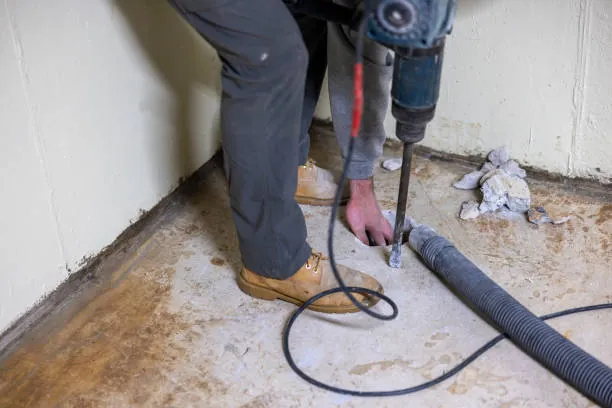
A radon mitigation system is not a one-size-fits-all pipe and fan. The installation should be designed around the home's foundation, the existing radon result, the areas where soil gas can enter, and the best route for exhausting it outside.
If you already have a radon test showing an elevated result, or your home has a passive system that needs to be activated, this page explains what goes into a professional radon system installation—from choosing the suction point to routing the pipe, installing the fan, checking system operation, and retesting the home.
What a Radon System Installation Does
Most residential mitigation systems work by creating negative pressure beneath or around the foundation so radon-containing soil gas is collected before it can accumulate inside the home. A typical active system uses a suction point, PVC vent piping, an inline fan, and an exhaust point outdoors. A visible performance indicator such as a manometer can help show that the fan and piping are creating suction.
The exact design matters. Radon mitigation systems should be designed around the building and installed according to applicable standards and requirements. The goal is not simply to attach a fan to a pipe; the collection points, piping, fan, exhaust route, and operating indicator all need to work together for the structure.
The Installation Process
1. Review the radon test and the house
Installation starts with the information available about the property. That includes the radon result, where the test was placed, the foundation type, finished and unfinished areas, crawl spaces, sumps, floor drains, and any existing radon piping. A home with a simple basement slab can require a very different layout from a house with a basement, crawl space, attached garage, additions, or multiple slab sections.
2. Select the suction point or points
For a basement or slab foundation, a suction point is commonly created through the slab so soil gas can be drawn from beneath the building. Some homes can use an existing suitable location, while others need a new point. Larger or divided foundations may need more than one suction point if one point cannot influence the entire area effectively.
This is one of the areas where installation quality matters. Homeowners commonly ask how many suction points are needed, whether a sump can be used, and whether one fan can serve multiple collection points. The answer depends on the foundation and the pressure field beneath it rather than simply the square footage of the house.
3. Route the radon pipe
PVC piping carries the collected soil gas to the exhaust point. The route may run through an unfinished basement, utility area, garage, attic, or exterior wall depending on the house. Routing should balance performance with appearance, accessibility, clearances, and the practical realities of the building. If the home is finished, pipe placement deserves additional attention because a technically functional system can still be a poor installation if it creates unnecessary visual or access problems.
4. Install and locate the fan
The active fan creates the suction that pulls soil gas through the collection system. Fan location depends on the system design and building. The installation needs to account for electrical requirements, weather exposure where applicable, service access, noise, and the route of the exhaust piping.
Fan noise is a real homeowner concern. The fan should be selected for the system and installed so unnecessary vibration and noise are minimized. Fan location, pipe contact with walls, mounting, and the layout of the system can all affect how noticeable the finished system is.
5. Address important entry paths
Sealing cracks, openings, or other obvious soil-gas pathways can be part of the installation, but sealing by itself is not the same thing as an active mitigation system. Sump pits, floor drains, plumbing penetrations, foundation cracks, and joints may need attention depending on the building. The objective is to make the collection system work with the structure rather than relying on one component to solve every pathway.
6. Check the finished system
After installation, the system should be checked for proper fan operation, piping connections, exhaust routing, labeling or other required details, and the visible operating indicator. The home should then be retested to determine whether the radon concentration has actually been reduced.
Radon System Installation for Different Foundations
Basement and slab foundations
Sub-slab depressurization is a common approach when the living area sits over a concrete slab. A collection point is established beneath the slab and connected to the vent pipe and fan. The final layout depends on the size and configuration of the slab and whether other areas of the house need to be addressed.
Crawl spaces
Crawl-space homes require a different approach when exposed soil is present. A sealed membrane can be used as part of a sub-membrane suction system, with the mitigation piping drawing soil gas from beneath the membrane. Crawl-space condition, access, moisture, and the condition of the existing ground cover can all affect the installation.
For detailed crawl-space work, see Crawl Space Radon Mitigation.
Homes with combination foundations
A house with a basement plus crawl space, attached addition, garage slab, or multiple foundation elevations can require a more involved design. A single suction point may not influence every connected or separated soil-contact area. In those cases, the system may use multiple suction points, interconnected piping, or separate collection areas.
Existing passive systems
Some newer homes already contain radon-resistant piping that was installed during construction. If testing shows that the passive system is not keeping radon low enough, the existing design may be evaluated for activation with a fan. Adding a fan is not automatically the whole job: the existing suction point, pipe routing, electrical arrangement, and system performance should be evaluated first.
How Much Does Radon System Installation Cost?
Installation cost depends on the property. A straightforward basement or slab system is generally less involved than a crawl-space, combination-foundation, or multiple-suction-point installation. The foundation, number of suction points, pipe route, fan requirements, finished areas, sump configuration, and whether an existing system can be reused can all affect the final price.
Published radon mitigation pricing varies widely because the work varies widely. Straightforward basement or slab systems are generally less involved than crawl-space, combination-foundation, or multiple-suction-point installations. The final cost can be affected by the foundation, number of suction points, pipe route, fan requirements, finished areas, sump configuration, and whether an existing system can be reused. A property-specific evaluation is the meaningful way to determine what your installation requires.
Questions to Ask Before Hiring an Installer
- Where will the suction point or points be located?
- How will the pipe be routed through or around the house?
- Where will the fan be installed, and how will noise and service access be handled?
- Will the sump, floor drains, cracks, or other openings need attention?
- How will you determine whether one suction point is enough?
- What performance indicator will I be able to check after installation?
- What testing should be completed after the system is installed?
- If I am buying or selling the property, what documentation will be provided for the transaction?
Radon Installation During a Home Purchase or Sale
Real-estate transactions create a different kind of installation problem: timing matters. If a buyer's test is elevated and the closing date is approaching, the homeowner, buyer, agent, inspector, and mitigation contractor may all need to coordinate. When requesting service for a transaction, provide the closing date and current radon report so the work can be planned around the transaction timeline.
If you are dealing with a property transaction, include the current radon report, property address, foundation information if known, and the closing timeline when requesting service. That gives the installer the information needed to determine what has to happen and when.
Quad Cities Homes Can Require Different Installation Designs
The Quad Cities is not one uniform housing market or one uniform building type. Older homes in Davenport, Rock Island, Moline, and East Moline can have different foundation layouts, additions, finished basements, and remodeling histories than newer construction in Bettendorf, Eldridge, or LeClaire. Silvis and Milan add additional housing stock and foundation configurations to the local mix.
The Mississippi River corridor, established neighborhoods near downtown Davenport and downtown Moline, the Rock Island Arsenal area, and the residential areas around I-74 and I-80 all sit within a region where houses were built and remodeled at different times. That makes the actual foundation and building layout more useful for system design than assuming every Quad Cities property needs the same pipe arrangement.
Frequently Asked Questions About Radon System Installation
Do I need a radon test before installing a mitigation system?
Testing is the normal starting point because the result tells you whether there is a radon problem to address and provides a baseline for evaluating the finished system. If you already have a recent valid result, that information can be used when planning the installation.
Can I just add a fan to my existing passive radon pipe?
Sometimes, but not automatically. The passive system needs to be evaluated to determine whether the suction point, pipe, routing, electrical setup, and overall design are appropriate for active operation. A passive system may need additional work beneath the slab before simply adding a fan will solve the problem.
How many suction points does a house need?
There is no universal number. A simple slab may work with one collection point, while a larger or divided foundation may need more. The important question is whether the system can influence the areas beneath the building where soil gas is entering.
Can a radon mitigation fan be installed in an attic?
Some systems are designed with the fan in or near an attic, while others use an exterior or another suitable location. The correct location depends on the system design, piping, electrical requirements, weather exposure, and applicable installation requirements.
Will the radon pipe have to run through my house?
Not necessarily. Pipe can sometimes be routed through unfinished interior areas or along an exterior wall. The best route depends on the structure and the balance between performance, appearance, accessibility, and installation requirements.
How long does radon system installation take?
Many straightforward residential installations can be completed in one visit once the design is established. More complicated homes can take longer because of multiple suction points, crawl-space work, difficult pipe routing, finished areas, or other building conditions.
Is a radon fan supposed to make noise?
An active fan makes some sound, but excessive vibration or a newly noticeable noise is worth investigating. Fan location, mounting, pipe contact with walls, and the system layout can all affect how noticeable the finished system is.
Does installing the system mean I do not need to test anymore?
No. Post-installation testing is important because the purpose of the system is to reduce the measured radon concentration, not merely to show that a fan is running. Continued periodic testing also helps identify changes in the home or system over time.
What if radon is still high after installation?
Do not assume that adding a larger fan is automatically the answer. The system should be evaluated for suction coverage, pipe condition, openings, fan performance, and the foundation areas being addressed. A second suction point or another design change may sometimes be appropriate.
Can a sump pump pit be used as part of a radon system?
A sump can sometimes be incorporated into a mitigation design, but it should not be assumed that an open sump or existing pipe automatically makes a complete radon system. Sump sealing, suction coverage, pipe connections, and the rest of the foundation all have to be considered.
Do I need to leave my house during installation?
For many routine residential installations, homeowners can remain in the property while work is performed, although the practical answer depends on the work being done, drilling location, access, and any other construction conditions. Ask about the expected work area when scheduling.
Ready to Install a Radon System?
If you have an elevated radon result, an existing passive system, or an older mitigation system that needs to be evaluated, send the property location and what you know about the current system. If you have a test report, include the result. If this is connected to a home purchase or sale, include the closing timeline.
Phone: (XXX) XXX-XXXX
Related services: Radon Testing · Radon Mitigation · System Repair · Radon Retesting · Radon Inspection & Evaluation